Supply Chain Management
Policy and Approach
Guided by our Corporate Philosophy, the TOTO Group is committed to creating enduring value for society and the environment. We integrate sustainability into our core management practices, leveraging our unique strengths to meet the expectations of all stakeholders.
As global supply chains face increasingly complex and diverse risks, we recognize that upholding high ethical, social, and environmental standards is essential—not only within our own operations but across our entire value chain.
Accordingly, the TOTO Group continuously reviews its procurement framework, including the "TOTO Group Purchasing Policy" and related initiatives. We regularly assess our practices to ensure full alignment with sustainability requirements, such as the "TOTO Group Supplier Code of Conduct" and "Green Procurement Guidelines". By maintaining disciplined purchasing practices and fostering mutual understanding, we aim to mitigate risks and enhance sustainability throughout the supply chain without imposing undue burdens on our suppliers.
TOTO Group Purchasing Policy
The TOTO Group continues to offer valuable products and services for customers through fair and equitable purchasing. In cooperation with our suppliers, we also aim to realize a sustainable society by addressing social issues and protecting the global environment throughout the entire supply chain.
Supplier Code of Conduct
The TOTO Group expects its suppliers to meet standards not only for economic performance but also for social, ethical, and environmental responsibility, as well as corporate accountability.
To clarify these expectations, we have established the "TOTO Group Supplier Code of Conduct".
This Code is based on the TOTO Group’s internal regulations and international sustainability standards, including the "Ten Principles of the United Nations Global Compact".
We distribute this Code to all suppliers at the commencement of new business relationships and upon any revisions to ensure thorough awareness.
Furthermore, we request that our suppliers ensure compliance with this Code not only within their own operations but also throughout their entire supply chain.
We review and update this Code as appropriate in response to changes in social conditions and the global environment.
Guidelines for Green Procurement
The TOTO Group has established the "TOTO Group Global Environment Policy" and is committed to reducing environmental impact across all business processes through a group-wide effort.
In our procurement activities, we promote initiatives that consider the conservation of the global environment and biodiversity in collaboration with our suppliers. By striving to reduce the environmental footprint throughout the entire supply chain, we aim to contribute to the realization of a sustainable society.
To put these principles into practice, we have compiled our fundamental approach and specific requirements for our suppliers into the "Guidelines for Green Procurement."
Management of chemical substances in products
Promotion System
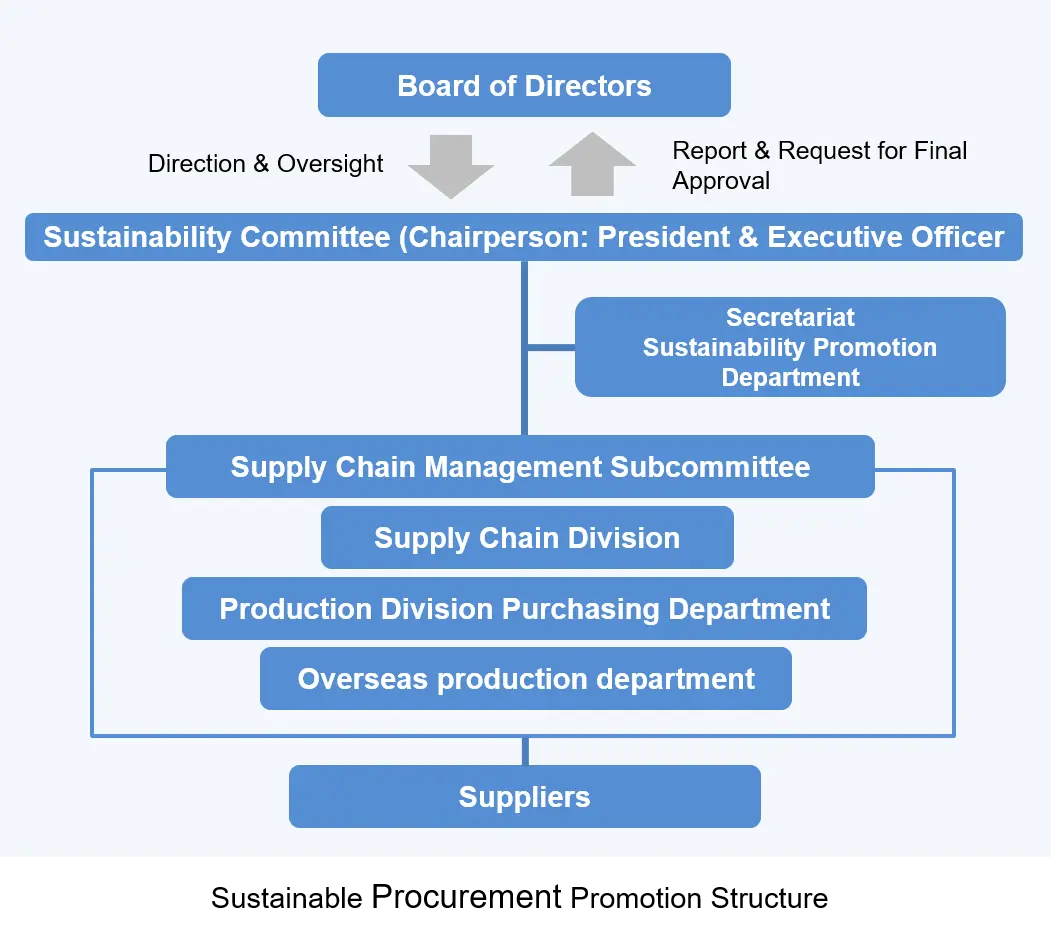
Sustainable Procurement within the TOTO Group is driven by the Supply Chain Management Subcommittee (chaired by the General Manager of the Supply Chain Division), which operates under the Sustainability Committee chaired by the President and Representative Executive Officer.
The committee collaborates closely with procurement departments within business divisions, administrative departments of overseas manufacturing sites, and other relevant organizations to formulate and execute action plans addressing sustainability issues, including human rights and climate change.
Progress on these plans and initiatives is reviewed periodically by the Committee Chair. It is subsequently reported to and deliberated on by the Sustainability Committee, which meets twice a year to determine Group-wide policies and material matters. Furthermore, among the matters decided by the committee, supply chain strategies and issues deemed particularly significant are reported to the Board of Directors for final approval. Through this framework, we have established a governance structure in which the Board of Directors exercises ultimate oversight of our sustainable procurement initiatives.
Sustainability Procurement Initiatives
The TOTO Group promotes sustainable procurement to build a resilient supply chain and deliver ethical, sustainable value across our entire value chain, from raw material sourcing to final production.
[Specific Initiatives]
Guided by the TOTO Group Supplier Code of Conduct, we are committed to continuous improvement in key areas, including human rights, labor standards, and environmental stewardship. Our initiatives are strictly aligned with international frameworks and are operationalized through comprehensive sustainability self-assessment questionnaires (SAQs) and rigorous monitoring.
For critical suppliers and partners identified as having higher sustainability risks, we conduct on-site sustainability audits. These go beyond mere compliance verification; we emphasize supplier engagement and capacity building by providing education on the significance of sustainability and supporting efforts to elevate performance across the supply chain.
[Risk Mitigation and Remediation]
When significant risks are identified, we promptly require corrective action plans and provide the necessary guidance for improvement. While we prioritize support, the TOTO Group reserves the right to re-evaluate or disengage from business relationships as a last resort, should a supplier fail to implement appropriate remedial measures after extensive consultation.
In FY2025, our risk assessments and mitigation processes confirmed that there were no material adverse impacts—either actual or potential—that necessitated the termination of any business transactions.
 PDCA Cycle for Supply Chain Management
The TOTO Group supply chain
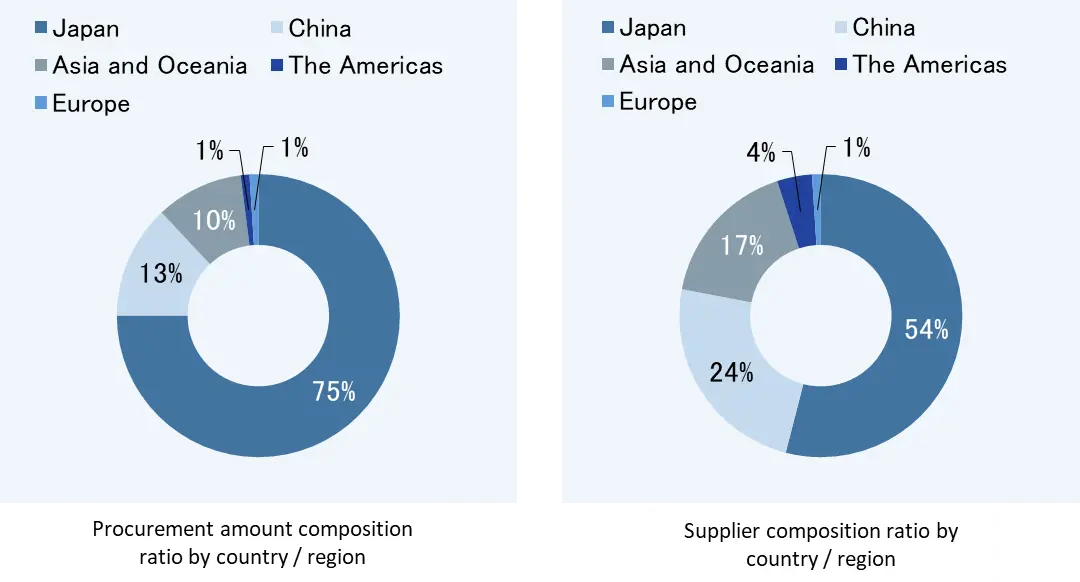
The TOTO Group's manufacturing sites are located across ten countries or regions, the Group has business with about 1,250 production material suppliers of different sizes, and our supply chain extends globally.
Structural rates by region based on the amount of procurement and the number of supplier companies in fiscal year 2025 are as follows.
・Selection Criteria for New Business Partners
The TOTO Group requires all new suppliers to comply with the "TOTO Group Supplier Code of Conduct."
When selecting new business partners, in addition to evaluating Quality, Cost, and Delivery (QCD), we assess their performance regarding sustainability—including human rights, labor practices, anti-corruption, occupational health and safety, and environmental conservation—based on a standardized evaluation sheet.
Compliance with these sustainability criteria is a mandatory requirement for establishing a business relationship with the TOTO Group.
Assessment of sustainability initiatives (Supplier Assessment)
・Categorization of Critical Suppliers
Each department of the TOTO Group selects suppliers every year based on the following definitions.
・Suppliers of critical parts and raw materials
・Non-substitutable suppliers
・Suppliers essential for achieving the business plan
・High-volume purchased suppliers
・Categorization of Suppliers with High Sustainability Risk
The TOTO Group selects suppliers every year based on the following definitions.
・Suppliers that handle raw materials with significant environmental, social, or biodiversity impact.
・Suppliers located in countries with low World Bank Governance Indicators (WGI) values.
・Suppliers that did not meet the TOTO Group's required level in sustainability evaluations.
・Sustainability initiatives
The TOTO Group periodically assesses the sustainability initiatives of our suppliers to build a sustainable supply chain. Since fiscal 2019, we have standardized this process globally, conducting a "Sustainability Questionnaire" on a three-year cycle for all suppliers of raw materials and parts used in our products. The questionnaire consists of questions aligned with the fundamental principles of the "TOTO Group Supplier Code of Conduct," allowing us to review each supplier's initiatives in detail. By effectively identifying risks and opportunities related to key issues, we facilitate constructive dialogue with our suppliers.
[Setting Compliance Items and Providing Improvement Support]
Among the questionnaire items, we have designated specific questions of particular importance to the TOTO Group as "MUST items," for which we have established mandatory compliance standards. For suppliers who do not meet these standards, we require the submission of corrective action plans and provide ongoing support and monitoring until improvements are completed. In fiscal 2025, 100% of the suppliers who responded to the MUST items met the required standards (number of non-compliant companies: 0).
[Supplier Engagement Based on Evaluation Ranks]
For critical suppliers in Japan, we categorize them into four ranks (A, B, C, and D) based on their total questionnaire scores. For suppliers ranked C or D, we continuously encourage improvement through dialogue and monitoring, focusing on the specific areas where scores were low. In fiscal 2025, five suppliers were ranked C or D. While issues were primarily identified in the categories of "Environment" and "Occupational Health and Safety," we engaged in dialogue with all five companies and confirmed that improvements were completed within the fiscal year.
[Supporting Autonomous Improvement through Feedback Reports]
To support the autonomous sustainability initiatives of our suppliers, we provide "Feedback Reports" (including benchmarking against overall averages) exclusively to each participating company via our Supplier Portal. By establishing a system where each supplier can access only their own report at any time, we facilitate an objective understanding of their strengths and weaknesses, fostering the continuous improvement of their sustainability activities.
[Future Goals]
In fiscal 2026, we will continue to aim for a 100% compliance rate for the MUST items. Based on strong relationships of trust with our suppliers, we will further enhance the level of sustainability activities throughout the entire supply chain.
Result of questionnaire survey
| Evaluation index | FY2022 | FY2023 | FY2024 | FY2025 |
| Number of suppliers | 1378 | 1360 | 1309 | 1241 |
| Number of suppliers who have participated in the assessment survey | 531 | 518 | 486 | 540 |
| Achievement rate of compliance with the TOTO standards* : % | 100 | 100 | 100 | 100 |
* Achievement rate of compliance with the TOTO standards:Rate of suppliers who have cleared standards for compliance items determined by the TOTO Group among all suppliers (includes completion of corrective actions).
FY2025 Target : Achievement rate of compliance with the TOTO standards 100%
Standards Required of Critical Suppliers
| Rank | Standard | Action |
| A | 95 points or more | Maintain and improve activities |
| B | 90 or more to less than 95 points | voluntary improvement |
| C | 80 points or more to less than 90 points | Score up by 1 rank or more |
| D | less than 80 points | Score up by 1 rank |
Assessment items for suppliers
1. Human rights/labor
(1) Prohibition of forced labor
(2) Prohibition of inhumane labor
(3) Prohibition of child labor
(4) Prohibition of discrimination
(5) Appropriate wages
(6) Working hours
(7) Right to organize employees
2. Safety/ Health
(1) Workplace safety and hygiene
(2) Occupational accidents and occupational diseases
(3) Emergency response
(4) Consideration for work that requires physical Load
(5) Safety measures for mechanical devices
(6) Health and safety of facilities
(7) Communication of health and safety related matters
(8) Employee health management
3. Environment
(1) Environmental management system
(2) Environmental permit and report
(3) Pollution prevention and resource saving
(4) Hazardous substances
(5) Solid waste
(6) Air Emissions
(7) Materials Restrictions
(8) Water Management (Wastewater)
(9) Water Management (Withdrawal and Consumption)
(10) Greenhouse Gas (GHG) Emissions
(11) Energy consumption
(12) Biodiversity
(13) Grievances from Local Communities
4. Fairness / Ethics
(1) Business integrity
(2) Disclosure of information
(3) Respect for intellectual property
(4) Ensuring anonymity and eliminating retaliation
(5) Responsible mineral procurement
(6) Properly management of imports and exports
5. Quality / Safety
(1) Ensuring product safety
(2) Quality management system
6. Response to business continuity plan (BCP)
7. Information security
(1) Information technology security
(2) Prevention of leakage of personal information
8. Social contributions
(1) Contribution to society/region
9. Management system
・ Addressing Human Rights Risks in the Supply Chain
In recent years, as corporate initiatives to respect human rights have come under intense social scrutiny, we recognize that addressing human rights issues within the supply chain has become increasingly critical. The TOTO Group has long designated "earth and stone raw materials"—the primary materials for our core products and an area with significant potential risks—as a key management priority, continuously conducting risk assessments. Furthermore, to deepen our understanding of both potential and actual human rights risks across our broader operations and global supply chain, we have been conducting Human Rights Due Diligence (HRDD) since fiscal 2021. This process is supported by external experts and aligned with the United Nations Guiding Principles on Business and Human Rights (UNGPs).
[Risk Identification and Assessment Methodology]
Our risk assessment prioritizes the elimination of forced labor (modern slavery) and child labor. High-priority suppliers are identified through a screening process that integrates the following elements:
• Geographic Risk: Country-specific scores developed using international indices such as the Global Slavery Index (WFF).
• Sector-Specific Risk: Industry benchmarks including the Corporate Human Rights Benchmark (CHRB) and KnowTheChain (KTC).
• Business Impact: Assessment of the TOTO Group’s degree of influence and procurement context.
For suppliers identified as high-priority, we conduct sustainability audits via third-party programs, such as The Workplace Conditions Assessment (WCA), or through our internal audit teams. These audits serve as a critical tool for verifying compliance and providing the necessary support to elevate human rights performance.
[FY2025 Performance and Remediation]
In fiscal 2025, we further enhanced the precision of our risk identification by incorporating "workforce composition" into our assessment criteria. We conducted a detailed analysis of the employment status of migrant, seasonal, contract, and dispatched workers among our key suppliers in Asia.
Key Outcomes of Fiscal 2025:
-Targeted Audits: Based on enhanced screening, three high-priority suppliers underwent WCA audits conducted by Intertek.
- Zero Critical Non-Compliance: Audits confirmed the absence of serious violations, including forced labor or child labor.
-Remediation and Improvement: The audits identified findings related to working hours management and social insurance contributions. We requested Corrective Action Plans (CAP) from these suppliers, and after reviewing the contents, we have verified that all necessary remediation measures have been fully implemented.
[Future Initiatives]
In fiscal 2026, the TOTO Group will continue to strengthen our human rights due diligence in the upstream supply chain. Through collaboration with our suppliers, we remain dedicated to realizing a sustainable society where the dignity and human rights of all individuals are respected.
・Initiatives to reduce greenhouse gas emissions in the supply chain
[Toward Achieving Carbon Neutrality Across the Entire Supply Chain]
The TOTO Group’s business activities are supported by a diverse range of materials and services provided by our suppliers. In fiscal 2025, the "procurement of raw materials and parts" accounted for 3.3% of the total CO2 emissions throughout our product life cycles. To achieve our goal of "Carbon Neutrality by 2050," we recognize that reducing greenhouse gas (GHG) emissions through close collaboration with our suppliers is an indispensable priority.
Based on this recognition, we have been requesting our major suppliers to set voluntary reduction targets since fiscal 2022. Currently, major domestic and international suppliers, representing over 80% of our total procurement value, have completed the setting of voluntary targets for emission reductions.
[Improving Calculation Accuracy and Capacity Building]
In the future, we aim to establish a framework that more accurately reflects the reduction efforts of each supplier by utilizing supplier-specific data (primary data). Through our annual "Survey on Greenhouse Gas Reduction Initiatives," we request suppliers to expand the scope of their calculations while focusing on capacity-building support to enhance the effectiveness of their calculation and reduction efforts.
[Key Initiatives and Achievements in Fiscal 2025]
In fiscal 2025, we implemented the following three initiatives to provide step-by-step support tailored to the specific challenges and progress of each supplier:
• Decarbonization Webinars: We hosted webinars featuring external experts, primarily for suppliers facing challenges in their reduction efforts. Approximately 200 companies participated, sharing the importance of emission calculations and specific examples of successful reductions.
• Support for Scope 1 and 2 Calculations: For 32 suppliers that had not yet begun calculating their own emissions, we provided a Calculation Support Tool that easily converts energy consumption data into CO2 emissions. This practical assistance enabled them to take the first step toward decarbonization management using their existing data.
• Development and Verification of Simplified Scope 3 Calculation Tools: To lower the threshold for calculation, we collaborated with five critical suppliers to develop a Simplified Calculation Tool (aligned with the Ministry of the Environment's database). Through pilot calculations, we identified and verified bottlenecks, accumulating expertise for future expansion.
[Future Initiatives]
In fiscal 2026, taking our initiatives to the next level, we will newly request our major suppliers to establish medium- to long-term reduction targets (within 5 to 10 years) aligned with SBT (Science Based Targets) standards. In parallel, we will continue to provide optimized, individual support tailored to each supplier's specific situation. By elevating the level of GHG management throughout the entire supply chain, the TOTO Group will accelerate its efforts toward realizing a decarbonized society.
Procurement Respecting Biodiversity
The TOTO Group positions global environmental conservation as one of its most important issues. With the aim of contributing to the creation of a "sustainable society," we are promoting corporate management based on a high level of environmental awareness, and are working to conserve biodiversity and use resources sustainably through our company and our suppliers.
Sustainable Raw Material Procurement Standards were established in 2010. The procurement of earth and stone raw materials and wood materials, from which our staple products are made, is regarded as an critical issue to consider. These standards are specified and published in the Guidelines for Green Procurement.
In addition to human rights, labor and compliance, we take into consideration the effects on the environment and ecosystem in the places where our raw materials are produced, as we pursue the appropriate balance between the sustainable use of resources and stable procurement and push forward with sustainable procurement in cooperation with suppliers.
<Standards for Sustainable Raw Material Procurement:>
(i) Raw materials produced in compliance with the laws and regulations of the place of origin.
(ii) Raw materials produced in a working environment where safety and hygiene are properly provided.
(iii) Raw materials whose impacts on the local environment and biodiversity are taken into consideration.
(iv) Respect for the human rights of workers and local residents at the source.
・Responsible Procurement of Earth and Stone Raw Materials
The TOTO Group conducts rigorous risk management in the procurement of earth and stone raw materials—the primary materials for our ceramic sanitary ware—to minimize impact on local environments and communities.
We identify and maintain a comprehensive list of mines, including not only direct trading companies but also secondary (Tier 2) suppliers. For all listed mines, we conduct sustainability questionnaires or interviews through trading companies at least once every three years. Through these assessments, we gain a comprehensive understanding of their status regarding legal compliance, occupational health and safety, respect for human rights, and environmental conservation.
[FY2025 Performance and Future Goals]
In fiscal 2025, we confirmed that all surveyed mines met the standards required by the TOTO Group (Compliance Rate: 100%). In fiscal 2026, we will continue to aim for a 100% compliance rate through strong collaboration with our suppliers and promote responsible raw material procurement.
Survey result
| Evaluation index | FY2022 | FY2023 | FY2024 | FY2025 |
| Number of mines surveyed | 38 | 28 | 26 | 34 |
| Survey coverage rate*:% | 100 | 100 | 100 | 100 |
| Achievement rate of compliance with the TOTO standards:% | 100 | 100 | 100 | 100 |
Survey target: All sanitary ware production factories
*Survey coverage rate: Percentage of mines surveyed against all mines that the ceramic sanitary ware plants purchase stone materials from.
FY2026 Target : Achievement rate of compliance with the TOTO standards 100%
Initiatives to Prevent River Pollution
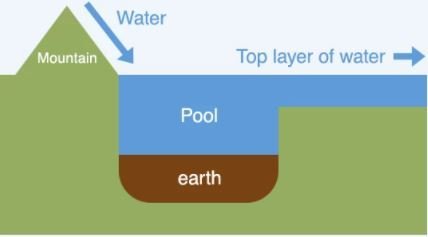
In addition to document-based surveys, we conduct regular on-site visits. As part of our efforts to prevent river pollution, we inspect water resource impacts and pollution prevention measures, such as verifying the status of sedimentation ponds to ensure that only clarified water is discharged.
 A settling reservoir
Environmental Restoration After Mining
We monitor the progress of environmental restoration (rehabilitation), such as vegetation reconstruction in exhausted mining areas, to ensure the sustainable use of natural resources.
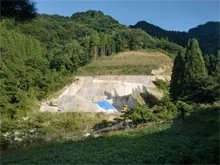 Mining sit
・Wood Materials
Illegal logging and excessive logging of forests is a major cause of loss of forests, leading to loss of biodiversity. The TOTO Group basically handles timber and timber products that have been certified as legal. Based on the Japanese Forestry Agency's "Guidelines for certifying legality and sustainability of timber and timber products", we survey information necessary for traceability regarding the wood materials to be procured (country of origin, commercial distribution, legality certification, etc.) every year. In addition, we have set a target value for the ratio of legal materials and recycled materials to the amount of wood materials used for the products we produce, and confirm the actual values. In recent years, we have maintained the ratio of legal and recycled lumber at 100% and aim at maintaining it in fiscal 2026 as well.
Percentage of Legal Wood Materials and Recycled Wood Materials in products
Indicators | FY2022 | FY2023 | FY2024 | FY2025 |
Legal Wood Materials:% | 13 | 15 | 14 | 10 |
Recycled Wood Materials:% | 87 | 85 | 86 | 90 |
Others:% | 0 | 0 | 0 | 0 |
Total:% | 100 | 100 | 100 | 100 |
Recycled Wood Materials:Wood based materials that are made from wood that has been used once, wood that has not been used, or that has been discarded.
FY2026 Target : Composition of Legal Materials + Recycled Wood Materials 100%
Communication with Suppliers
・Policy briefing session for suppliers
To help suppliers understand the TOTO Group’s management policy, yearly business policy, and purchasing policy and to deepen the relationship of trust and encourage two-way communication, we hold policy briefing sessions for key suppliers every year. In fiscal 2025, it was held both online and offline, and materials were also made accessible via the internet. In addition to communicating TOTO's purchasing policy to suppliers, we explained the importance of sharing production information and sustainability, and requested your cooperation in BCP.
We also commended suppliers who contributed to cost reduction, on-time delivery, and quality improvement that year.
Results of Policy Briefings for fiscal 2025
FY2025 | |
| Number of companies participated | 596 |
| Number of companies commended | 50 |
・Responding to Disasters and Other Risks
To strengthen our ability to respond to natural disasters, which have been frequent in recent years, we are working with suppliers to establish a system that will enable us to immediately know the impact of a risk when it occurs and implement countermeasures by grasping which parts are produced in which site, quickly determining the status of damage using external services and conducting simulations to prepare for contingencies. We are also working to establish a stable supply system by deepening the risk assumptions, such as securing inventory based on the BCP according to the recovery plan per part and duplicating procurement lines.
・Partnership Building Declaration
Agreeing with the purpose of the Council on Promoting Partnership Building for Cultivating the Future promoted by the Cabinet Office and METI, the TOTO Group has developed and announced the Partnership Building Declaration. The purpose of this declaration is to build new partnerships by promoting collaborations and coexistence and co-prosperity with the suppliers in the supply chain and businesses that pursue value creation.
 partnership building declaration logo
・Grievance Mechanisms and Ensuring Transparency
At the TOTO Group, we foster a culture of integrity where suppliers feel empowered to raise concerns without fear of reprisal. To maintain a fair and ethical supply chain, we provide two specialized grievance channels managed by independent third parties. These channels ensure that potential compliance violations or human rights impacts are addressed promptly and professionally.
[Reporting Channels]
We offer two distinct hotlines based on the nature of the concern:
Channel | Focus Area | Scope of Issues |
| JaCER Platform (External Remedy) | Human Rights | Forced labor, child labor, discrimination, unsafe working conditions, and other labor rights violations. |
| TOTO Group Helpline (Internal/External) | Business Ethics | Legal violations, bribery, coercion regarding gifts/entertainment, or unfair procurement practices (e.g., abuse of dominant position). |
[How to Report via JaCER]
Human rights grievances are accepted through the Japan Center for Engagement and Remedy on Business and Human Rights (JaCER) website. As a specialized platform, JaCER ensures that grievances are handled in accordance with international standards for non-judicial grievance mechanisms.
>Initiatives on Human Rights(Grievance Mechanism)
[Whistleblower Protection and Confidentiality]
The TOTO Group stands firmly behind the protection of whistleblowers and strictly adheres to the following core principles:
Strict Confidentiality: The identity of the reporter and the details of the report are kept strictly confidential. Information is shared only on a need-to-know basis with the limited number of personnel involved in the investigation.
Zero Tolerance for Retaliation: We provide a zero-tolerance guarantee against retaliation. No supplier will face disadvantageous treatment—such as termination of business or reduction in orders—as a result of reporting a concern in good faith.
Impartial Investigation and Remedy: Every report is investigated thoroughly by the relevant departments. We strive for a fair resolution through constructive dialogue with the reporting party and implement corrective actions where necessary.
[Our Goal]
To build sound, equitable, and transparent partnerships that drive sustainable growth for both the TOTO Group and our valued suppliers.
Procurement Personal Development
In order to realize a sustainable society as a whole supply chain, it is indispensable for the TOTO Group's procurement personnel to recognize social and environmental issues in the supply chain. The TOTO Group has started offering basic training that includes sustainability training for employees engaging in procurement activities and provides sustainable procurement training on a regular basis to continuously raise the level of employees competencies. Also, we conduct training on specific themes that need to be strengthened, such as the reduction of human rights risks in the supply chains and the reduction of greenhouse gas emissions.
お気に入りに保存しました